



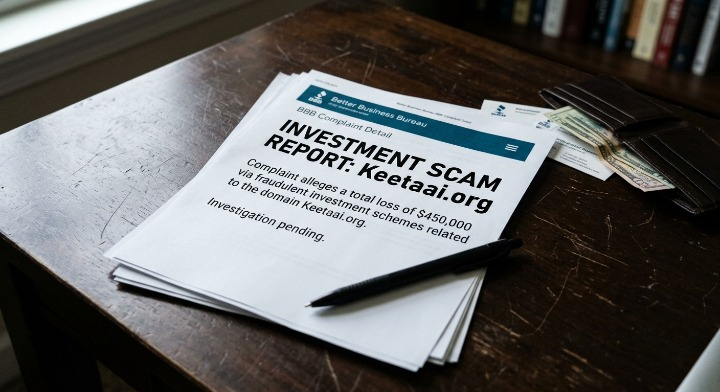
A consumer report filed with the Better Business Bureau (BBB) Scam Tracker on October 30, 2026 describes an alleged investment scam involving Keetaai.org. The person, located in Concord, North Carolina, reports a $450,000 loss. They say the global trading platform was fraudulent and that customer service stopped responding after final liquidation funds were sent to close the trading account.
These are one consumer’s allegations. They have not been independently verified, and this article does not conclude that Keetaai.org is a confirmed scam.
What Is the Keetaai.org Investment Scam Report About?
It is a BBB Scam Tracker complaint (Report ID 1464928) alleging that Keetaai.org was a fraudulent global trading platform. The reporter lists a $450,000 loss in the investment category. The scammer’s location, email and phone number are listed as unknown, and no authority has confirmed the claims.
BBB notes that Scam Tracker entries come from victims and potential victims, and that scammers often borrow legitimate names. The entry names keetaai.org as the website. As summarized in the brief, it does not say how the person found the platform, how money was deposited, or whether any withdrawals were attempted, so this article does not speculate on those points.
One independent signal exists, though it is not a regulatory finding. An automated Gridinsoft scan classified keetaai.org as a suspicious website, citing a very young domain of about two months, two blacklist detections and no established review history. Automated scores like this are risk indicators, not proof of wrongdoing.
What Happened When the Customer Tried to Close the Trading Account?
According to the complaint, the customer sent final liquidation funds to close the trading account. After that payment, the platform’s customer service reportedly stopped responding. The report gives no further detail about balances, profits or withdrawal attempts, so none is assumed here.
Trading account liquidation normally means closing positions and settling the account. The complaint suggests the final payment and the end of communication came close together. Whether that sequence reflects deliberate fraud, a technical failure or something else cannot be determined from the report alone.
How Much Money Was Reportedly Lost in the Keetaai.org Case?
The reporter states a loss of $450,000. This figure comes only from the BBB complaint and has not been verified through bank records, court filings or regulatory findings. No other victims or losses are documented in this report.
A loss of this size raises a practical question: how did the money move? Any payment connected to closing or liquidating an account deserves close scrutiny. Legitimate firms generally disclose fees and conditions in writing before an account is opened, not after funds are already committed.
What Are the Warning Signs of a Suspicious Online Trading Platform?
These are general red flags for any fake trading platform, not additional confirmed facts about Keetaai.org:
- Lack of transparent company information. No clear legal entity, address or licensing details.
- Unclear trading and liquidation conditions. Vague or shifting terms for closing an account.
- Unexpected demands for additional payments. New “fees,” “taxes” or “deposits” to access your own money.
- Unresponsive customer support. Replies slow, then stop, especially after a payment.
- Difficulty closing trading accounts. Obstacles every time you try to exit.
- Unverified claims about investment returns. Promised profits with no audited evidence.
How Can Investors Verify an Online Trading Platform?
Confirm who operates the platform, check that it is registered with a financial regulator, read the withdrawal terms, and look for independent complaints. Never send more money under pressure, and keep records of every payment and message.
- Check legal identity. Look for a named company, registration number and physical address, then verify them through business registries and domain records.
- Verify registrations. Use official tools such as FINRA BrokerCheck, the SEC’s adviser search, the NFA’s BASIC database or your state securities regulator.
- Review terms. Understand fees and withdrawal conditions before depositing.
- Research complaints. Compare BBB, regulator warning lists and independent reviews.
- Resist pressure. Urgency is a classic manipulation tactic.
- Preserve evidence. Save receipts, screenshots, emails and chat logs.
What Should Victims Do After an Online Investment Scam?
Contact your bank or payment provider immediately, preserve all transaction evidence, report the incident to the FBI’s IC3, the FTC and your state regulator, and be wary of “recovery services” that demand upfront fees or guarantee results.
Speed matters, because some payment channels have narrow dispute windows. Fraudsters also target prior victims with fake recovery offers, so verify any firm independently before sharing information or paying.
How Can FintechLegals Help With Investment Fraud Investigations?
FintechLegals provides services related to financial fraud, including fraud investigations, due diligence, claims and disputes and digital forensic analysis. These can help people understand suspicious transactions, assess a questionable platform and weigh their options.
Where cryptocurrency was part of a payment trail, crypto investigation and crypto asset tracing may also be relevant. The BBB report does not say how payments were made, so this applies only if digital assets were involved. No investigator can guarantee recovery of funds or identification of a scammer.
If you have concerns about a trading platform or a past payment, contact FintechLegals to discuss your situation.
https://fintechlegals.com/empire-box-office-mojo-investment-scam-report/
For more updates, follow us on LinkedIn.

Leave a Reply