


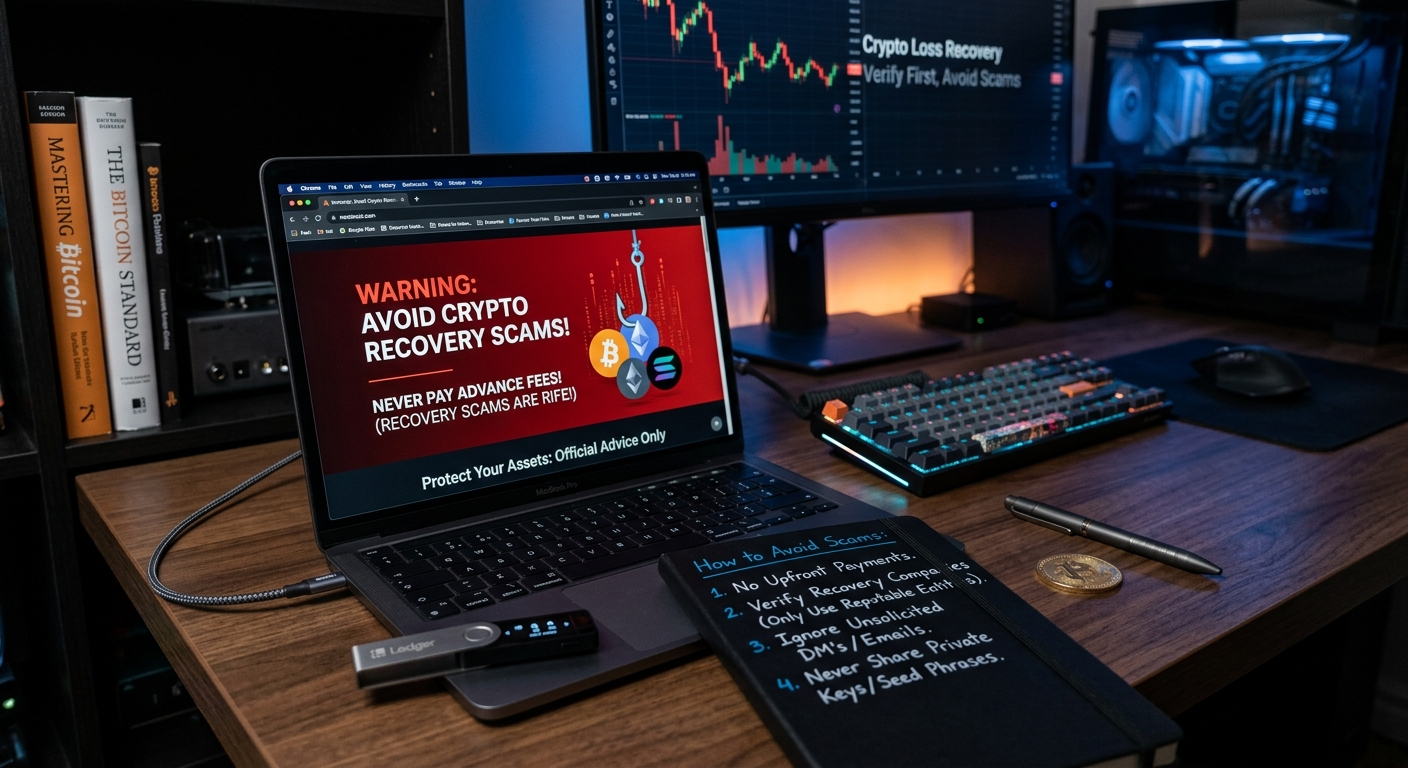
Losing cryptocurrency to fraud is distressing enough, but many victims are targeted again. Once a loss becomes known — through forum posts, exchange reports, or public complaints — opportunists reach out via social media, WhatsApp, Telegram, email, unsolicited ads, or slick “recovery” websites, claiming to be specialists, lawyers, or officials who can get the money back. The reality is blunter: no legitimate investigator or law firm can guarantee recovery of stolen cryptocurrency. Anyone promising certainty is a warning sign, not reassurance.
How Can I Avoid a Crypto Recovery Scam?
Make sure you verify the provider’s qualifications and business registration on your own before dealing with them. Consider any promise of getting your money back as a warning sign because real investigations come with no promises of success. Be careful of paying any sort of upfront costs and never give away your private keys or seed phrases to anybody. Make sure to ask about the procedure for conducting the investigation.
What Is a Crypto Recovery Scam?
A crypto recovery scam is a follow-up fraud aimed at people who have already lost funds. Scammers pose as asset-tracing experts, blockchain investigators, regulators, or attorneys who claim they’ve “already located” the stolen funds and just need a fee to release them. For example, a victim who lost funds in a fake trading platform might later be contacted by someone claiming to work with an exchange’s “recovery department,” asking for a payment to unlock the supposedly frozen wallet. This second approach is designed to exploit the victim’s hope of getting something back.
Common Crypto Recovery Scam Warning Signs
Some of these elements tend to occur over and over again in these scams:
- Guaranteed recovery – no legitimate service can provide such a guarantee.
- Immediate results – when research on the blockchain takes time.
- Urgency in action to prevent you from investigating any aspect of the scheme.
- Unreasonable payments upfront, most likely paid in cryptocurrencies.
- Phoney unlocking or blockchain release charges without any valid reason.
- Phoney taxes or AML fees which need to be paid before releasing your funds.
- Alleged special access to exchange systems or even wallets.
- Requests for private keys or seed phrases – a legitimate service will never need them.
- Impersonation of police or other regulatory authorities.
- Fake testimonials, credentials and other case studies.
The presence of any of these signs is enough to be wary of a scam, while several of them already indicate fraud.
What Legitimate Crypto Investigation May Involve
A genuine investigation typically involves reviewing transaction hashes and wallet addresses, tracing the movement of funds across the blockchain, and examining communications, payment records, and any websites or profiles connected to the fraud. Investigators also preserve evidence properly, since this matters for any later legal action, and assess what realistic legal or regulatory options might exist.
Tracing a transaction is not the same as identifying who controls the receiving wallet, and identification does not guarantee recovery. Blockchain transactions cannot simply be reversed. A responsible investigator explains these limitations rather than promising outcomes.
What Should You Do After Losing Crypto?
- Maintain all transaction history and communications with the alleged scammers.
- Maintain all website URLs that are pertinent and screenshots before they get deleted.
- Avoid sending any more money to anyone claiming to recover your funds.
- Do not provide your private keys or seed phrases to anyone.
- Research a recovery agency before hiring them.
- It is advisable to report to the appropriate authorities.
- Always have an independent review done before paying anyone anything else.
How FintechLegals Can Help
FintechLegals provides assistance to the victim via evidence-based services that include crypto asset tracing, crypto investigation, more general fraud investigation, and dispute resolution services. It all about identifying what has occurred and what opportunities may be available, not about the promise of recovery of money. This gives victims a clearer, more honest picture before deciding on next steps.
FAQ
Can stolen cryptocurrency be recovered?
Sometimes, but there’s no guarantee. Outcomes depend on factors like where funds moved and whether they reached a regulated exchange.
How do I know if a crypto recovery company is legitimate?
Check registration and credentials, be wary of guarantees, and ask for a clear explanation of their methods.
Should I give a recovery company my seed phrase?
No. No legitimate provider needs your seed phrase or private keys to investigate.
What should I do if a recovery scammer contacts me?
Don’t pay or share sensitive information. Preserve the communication and report it.
Conclusion
Any contact from a person offering guaranteed crypto recovery should always raise suspicion rather than hope. Rather than paying someone to perform a miracle, it would be wiser to secure the necessary evidence, confirm the credentials of the service provider and conduct a proper investigation based on the facts.
Talk to an advisor
Get a quote
Leave a Reply