


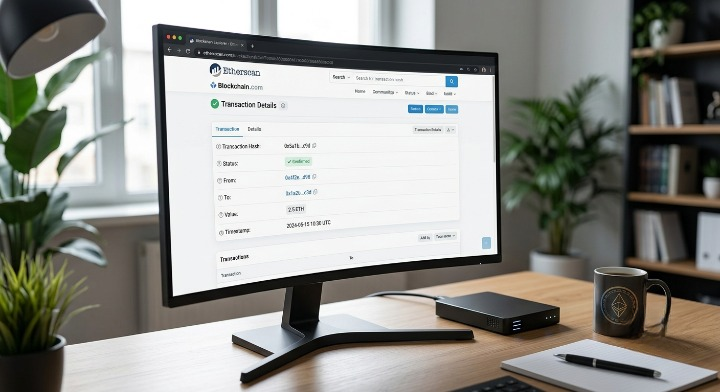
To read a blockchain explorer, choose the correct network, paste the transaction hash into the search bar, and review the status, timestamp, sender, recipient, amount, and fee. This shows where a transfer went and whether the network confirmed it. It does not show who controls the addresses involved.
A blockchain explorer turns raw blockchain data into readable pages. The main items to understand are the transaction hash, the wallet address, the transaction status, and the movement of funds between addresses.
What Is a Blockchain Explorer?
A blockchain explorer is a search tool for publicly available blockchain records. You can look up transactions, addresses, and blocks without special software. Ethereum’s documentation describes explorers as a portal to blockchain data, where transaction details include the hash, block, and timestamp.
Each explorer supports specific networks. A Bitcoin explorer will not find an Ethereum transaction, so a “not found” result often means you chose the wrong network.
How to Read a Blockchain Explorer Step by Step
- Identify the network. Check the sending wallet or exchange to see whether the transfer used Bitcoin, Ethereum, Tron, Solana, or another network.
- Find the transaction hash (TXID). Wallets and exchanges usually show this in the withdrawal or transaction history.
- Search the hash in an explorer that supports that network.
- Check the status, timestamp, and block confirmations.
- Review the sending and receiving addresses.
- Examine the amount, fee, and any extra data, such as token transfers or contract calls.
- Follow later transactions from the receiving address, where the explorer allows it.
A transaction hash identifies one specific transaction. A wallet address can appear in many transactions.
Which Transaction Details Matter When Tracing Crypto Funds?
- Hash and status: confirms the transaction exists and whether it succeeded, is pending, or failed.
- Sending and receiving addresses: show where funds left and arrived.
- Amount: helps match the explorer record to your own records.
- Date and time: anchors each step in a timeline.
- Block number and confirmations: show how settled the transaction is. A transaction with zero confirmations is still unconfirmed.
- Fees: can help distinguish transaction types or flag unusual activity.
- Token transfers and contract interactions: on networks like Ethereum, a token movement may appear separately from the native coin transfer.
Together, these details let you build a timeline of how funds moved. Bitcoin transactions often return “change” to an address the sender controls, so multiple outputs do not necessarily mean multiple recipients.
How to Follow Cryptocurrency from One Wallet to Another
Open the receiving address and look at what happened next. A simple path might look like this:
Wallet A → Wallet B → Wallet C → exchange deposit address
Funds may also pass through bridges, swaps, or other services, which makes the trail harder to read. Investigators follow crypto funds across exchanges and wallets by combining on-chain data with other evidence.
Visible transfers do not establish who controls an address or prove that funds belong to a particular person.
Can a Blockchain Explorer Trace Stolen Cryptocurrency?
It can help document the movement of funds and highlight addresses worth investigating. It cannot recover cryptocurrency, name every wallet owner, or guarantee that assets can be frozen.
Further steps may involve specialist blockchain analysis, exchange records, and legal requests. If funds reach an exchange, timing matters. See whether a crypto exchange can freeze stolen funds, and consider a structured crypto investigation when the trail is unclear.
Common Mistakes to Avoid When Using a Blockchain Explorer
- Choosing the wrong network. The same address format can exist on several chains.
- Confusing token transfers with native transfers. A USDT transfer is not an ETH transfer.
- Misreading pending transactions. Pending means not yet confirmed, not completed.
- Assuming every address belongs to an individual. Exchanges and services use many addresses.
- Treating a visible transaction as proof of fraud. Transaction data shows movement, not intent.
When Is Professional Crypto Assets Tracing Necessary?
Consider specialist help when funds split across many addresses, cross blockchains, appear to reach an exchange, or need to be documented for a complaint or legal inquiry.
According to its website, FintechLegals offers crypto assets tracing using blockchain forensics. It works with major networks including Bitcoin, Ethereum, Solana, Tron, XRP, and Litecoin. It states that it does not recover funds itself, but prepares findings that an attorney, law enforcement, or a financial institution can use. Results are not guaranteed.
Related support includes due diligence services for checking the entities or counterparties behind a transaction, and claims and disputes support. If you are assembling a case, the evidence needed for a cryptocurrency investigation is a useful starting point.
Frequently Asked Questions
How do I find a cryptocurrency transaction using a transaction hash?
Select the right blockchain explorer, paste the hash into the search bar, and open the result to see status, addresses, and amount.
Can I trace a crypto transaction using a wallet address?
Yes. Searching an address shows its transaction history, from which you can follow individual transfers.
Does a blockchain explorer show the identity of a wallet owner?
No. Explorers show addresses, not verified identities. Linking an address to a person usually needs other evidence or legal processes.
Can a blockchain explorer track Bitcoin and Ethereum transactions?
Yes, but each network needs a compatible explorer.
How can I follow cryptocurrency after it moves to another wallet?
Open the receiving address and review its later outgoing transactions, repeating the process at each step.
Can a blockchain explorer show whether a transaction is confirmed?
Yes. It shows the status, block number, and confirmation count.
Can blockchain explorers help trace stolen cryptocurrency?
They can help document the trail, but they cannot recover funds or identify owners on their own.
When should I seek professional crypto assets tracing assistance?
When funds move across many addresses or networks, reach an exchange, or you need evidence for a formal complaint or legal inquiry.
Conclusion
Knowing how to read a blockchain explorer lets you verify a transaction, confirm its status, and follow visible transfers between addresses. It does not identify owners or recover funds. When the trail becomes complex, specialist tracing can turn blockchain records into structured findings.
For more updates, follow us on LinkedIn.

Leave a Reply