



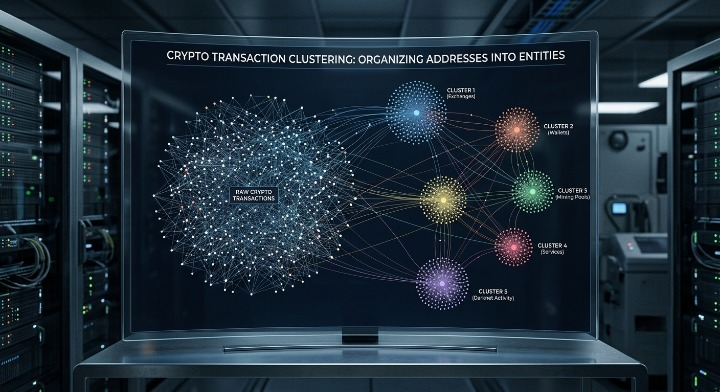
Crypto transaction clustering is a type of analysis of the blockchain which involves putting crypto addresses and transactions together on the basis of observable features found on-chain that seem related to each other. The clustering of crypto transactions is a method of analyzing data in order to create leads for investigation.
What Is Crypto Transaction Clustering?
Crypto transaction clustering involves classifying blockchain addresses believed to be associated based on the behavior of those addresses in their transactions. Since most public blockchains have every transaction stored permanently in their history, it allows for investigations into relationships between addresses not evident by a single transaction.
For example, investigators can identify multiple cryptocurrency addresses engaging in suspicious transactions. Analysts can examine those relationships and group addresses into a potential cluster for further investigation.
Clustering attempts to identify relationships within transaction data — it does not, by itself, establish that a cluster of addresses belongs to one person or organization. That distinction matters throughout the rest of this article.
How Does Crypto Transaction Clustering Work?
At a high level, analysts look for recurring patterns rather than any single data point. Based on the blockchain technology and approach used, factors considered include:
- Relations among addresses in terms of transactions
- Relationship between inputs and outputs in a transaction
- Repeatedly used transaction patterns
- Common spending or transactions pattern
- Sequencing in terms of transfers
- Asset transfers between addresses
- Interactions with known exchanges
The format for transactions is different from one blockchain to another, meaning that the clustering approach used in one blockchain will be different from the other; thus, clustering usually depends on the specific asset under study.
Why Is Transaction Clustering Used in Crypto Investigations?
Cluster analysis is used because it allows investigators to process huge amounts of raw data that are otherwise unmanageable. Some uses of the method include:
- Tracking the movement of cryptocurrencies through several accounts
- Analyzing possible links between various wallets
- Monitoring suspicious transactions
- Creating leads for investigations
- Discovering clusters of related addresses
- Performing asset tracking and fraud investigations
- Structuring complicated information on blockchains
Cluster analysis usually serves as just one tool in the larger process of crypto investigation. Generally, investigators use cluster analysis together with other evidence before drawing any conclusions.
Can Transaction Clustering Identify the Owner of a Crypto Wallet?
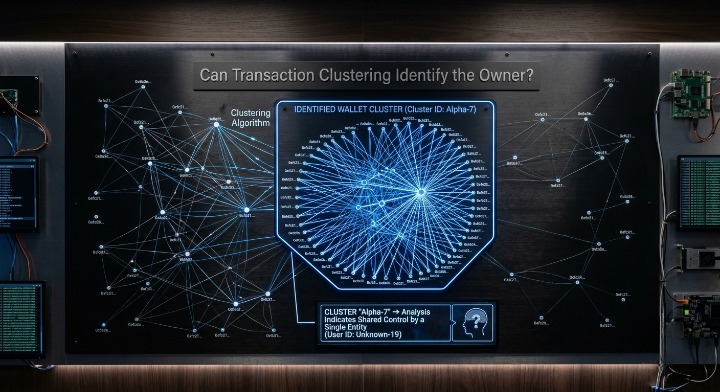
No — clustering in itself does not help you identify the actual real-life owner of the wallet. Clustering will reveal the connection between addresses, but it will not, in itself, identify the owner’s name, entity, or identity.
In order to discover the identity of the real-life person or entity behind an address, extra steps need to be taken, including but not limited to:
- Exchange account information
- Public information
- Inter-party communication
- Registration information
- Web or domain info
- Other evidence of investigation
Without these extra steps, clustering will just stay at that – clustering of addresses.
What Is the Difference Between Wallet Clustering and Wallet Attribution?
Wallet Clustering refers to the identification and classification of wallets by means of analytical criteria that indicate that they could potentially be linked to each other.
Wallet Attribution involves the association of an address or cluster of addresses with a specific person, business, service, and more, on the basis of additional evidence beyond clustering.
Clustering ≠ attribution. A cluster identifies a potential relationship among addresses; attribution goes further by linking that cluster to a specific real-world party. Investigators generally need both steps — and often additional off-chain evidence — before making conclusions about identity.
How Is Crypto Transaction Clustering Used in Blockchain Forensics?
Within blockchain forensics, clustering serves as an organizing tool. Investigators can make use of clusters to:
- Help organize a huge or complicated transaction data set
- Recognize related wallets that require further investigation
- Track the flow of digital currencies
- Discover any patterns requiring further investigation
- Link on-chain information to off-chain data
- Generate investigative hypotheses
The cluster technique allows investigators to reduce a large data set to a smaller list of leads, which can be further investigated along with forensic and legal data.
Can Transaction Clustering Help Trace Stolen Cryptocurrency?
Clustering might prove to be useful for investigators while studying wallet connections during theft investigation of cryptocurrency, although it cannot provide any guarantees of finding and identifying the lost cryptocurrency assets. On a regular basis, investigators might study:
- Victim’s wallet
- Possible receiving wallets
- Possible subsequent transaction and transfers
- Other connected addresses
- Possible destination exchange or services where the assets might have been sent
However, clustering might prove helpful in cryptocurrency asset tracing, while the possibility of recovery of these assets is determined by numerous factors apart from clustering.
What Are the Limitations of Crypto Transaction Clustering?
There are specific constraints to clustering that diligent researchers must take into consideration:
- Not all relevant addresses belong to one individual
- The presence of common custodial services may introduce false relationships
- The different architectures of blockchains influence the application of clustering methods
- Technologies used for increased privacy affect clustering analysis
- Exchanges and custodial services use multiple addresses within their operations
- Some transactions happen off-chain and do not feature on public blockchains
- Analytical findings are always supported by other pieces of evidence
A cluster is just an analytical finding or an investigative lead, but not proof of ownership. The most effective way to use clustering is in conjunction with the evidence needed for a cryptocurrency investigation, in the realm of cryptocurrencies.
Is Crypto Transaction Clustering the Same as Blockchain Tracing?
No. Blockchain tracing usually involves tracing how cryptocurrency moves from one transaction to another — that is, tracing where the funds went. On the other hand, transaction clustering usually refers to clustering addresses and transactions at any point in time based on certain relations.
Clustering may be one of the techniques that could be employed in cryptocurrency tracing more broadly.
Is Transaction Clustering Used for Crypto Fraud Investigations?
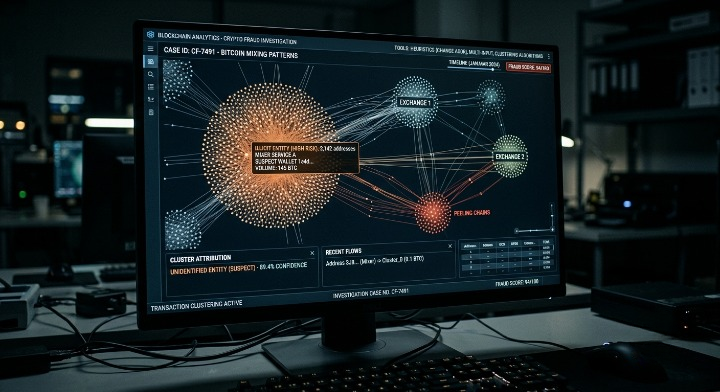
Yes. Clustering could assist with crypto fraud investigations related to:
- Crypto investment scams
- Fraudulent crypto trading platforms
- Stolen crypto
- Suspected crypto wallet network
- Payment flow scam
- Any other digital asset fraud
For these investigations, clustering is used together with other techniques, such as the examination of platform data, communication channels, bank transactions, etc., and not in isolation. Victims who spot a problem with a crypto wallet should consider familiarizing themselves with tips on reporting a crypto scam as an initial step.
Frequently Asked Questions
What is crypto transaction clustering?
Crypto transaction clustering is a blockchain analytics tool which classifies cryptocurrency addresses or transactions presumed to have something in common according to their transactional behavior. It is performed in order to structure information and develop hypotheses rather than determine ownership or identity automatically.
How does cryptocurrency transaction clustering work?
Analysts consider the following parameters: input/output relations, repeated transactions, time and interaction with certain services. Techniques depend on the blockchain because transactions have different structures on each network.
What is wallet clustering?
Wallet clustering is another name for the classification of cryptocurrency addresses supposed to have some connection with each other through blockchain analysis.
Is it possible to determine the owner of a cryptocurrency wallet using transaction clustering?
Not alone. Transaction clustering only reveals relationships between addresses, while determining who is an address needs other supporting evidence.
Is it true that transaction clustering is the same thing as blockchain tracing?
It is not. While blockchain tracing involves tracking how the money is moving from one transaction to another, clustering uncovers connections between different addresses.
Can transaction clustering help to trace the lost cryptocurrency?
Yes. It will help trace connections between different wallets associated with stolen cryptocurrency. However, transaction clustering does not guarantee the return or identification of the lost cryptocurrency.
What is the difference between clustering and wallet attribution?
Clustering puts addresses that may be connected into one group. Attribution takes it a step further, linking the cluster to a certain known entity or individual on the basis of some additional evidence.
Does transaction clustering show that two wallets are controlled by the same individual?
Not necessarily. It can only imply that addresses are related, but proof of common ownership would require more evidence due to possible use of shared services and other factors that may give a false impression.
How does transaction clustering help in crypto investigations?
Transaction clustering helps investigators to track cryptocurrency transactions, organize data and generate leads to follow up. Transaction clustering is not used alone in the investigation but rather in combination with other approaches and evidence.
What are the limitations of crypto transaction clustering?
Limitations consist of possible false patterns created by shared custodial services, differences in blockchain architecture, privacy coins and off-chain transactions that cannot be covered by transaction clustering.
Conclusion
Crypto transaction clustering is an analytical technique that can help investigators identify potentially related blockchain addresses and organize complex transaction activity into something usable. It is a great way to begin, yet clustering analysis should be considered just one element of the overall study process, rather than a final conclusion in itself. Attribution or real-life identity determination usually needs more information collected both on and off the chain, as well.
FintechLegals works for their clients in cases of cryptocurrency investigations, blockchain analysis and cryptocurrency asset tracing, merging clustering analysis together with other techniques of forensic research. Of course, there can never be a hundred percent guarantee that one can identify the culprit or retrieve the assets back, yet the proper analysis process would be your strongest ground for any further actions.
For more updates, follow us on LinkedIn.
Leave a Reply