



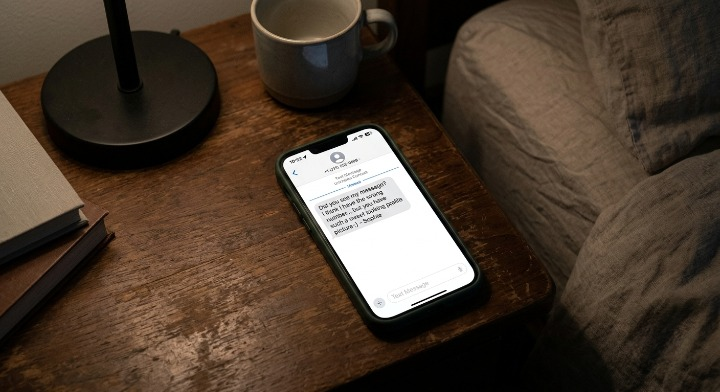
A short, friendly text from an unknown number can be the first step in a longer scam. A recent Better Business Bureau (BBB) report shows how this works. The wrong number text scam relies on curiosity and politeness, not threats. This article explains what was reported, how the pattern typically develops, and how to protect yourself from this kind of romance text scam.
What Is the Wrong-Number Text Scam Reported to BBB?
A wrong number scam begins with an unsolicited message that looks like a mistake. The sender hopes you will reply, and once you do, they try to start a friendly conversation. In the case reported to BBB Scam Tracker, a Santa Monica, California resident received exactly that kind of text.
According to BBB Scam Tracker report #1468009, filed on November 3, 2026, the message came from (250) 460-7961 and asked, “Did you see my message?” The recipient replied by asking who was texting. The sender said she had typed the wrong area code, apologised, called herself Natalie, and asked for the recipient’s name.
The recipient’s phone had already flagged the text as spam. They gave no name, shared no personal information, and sent no money. The report lists the business and the sender’s location as unknown, and no financial loss was disclosed.
Everything above is the reporter’s account. The sender’s identity, the name “Natalie,” and the phone number’s owner have not been independently verified. A single suspicious message cannot establish who sent it or what they intended.
How Does a Simple Wrong-Number Message Start a Romance Scam?
Scammers use a harmless-looking opener to get a reply, then build trust through repeated, friendly contact. Over days or weeks, the conversation may turn personal or affectionate. Only after that bond forms might the sender introduce a request for money or an investment opportunity.
This is general scam methodology, not a confirmed outcome of this report. The BBB report describes only the opening exchange. It identifies the message as a common wrong-number opener that can lead to romance or investment scams.
Why Do Scammers Introduce Themselves as Strangers?
An accidental-contact story lowers your guard. A message that appears to be a mistake feels less threatening than a sales pitch, and most people feel it is polite to reply. Asking your name moves the exchange from correction to conversation.
Replying also tells the sender that your number is active and that you respond to unknown contacts. That makes you a more valuable target, and your number may be reused or shared. Anyone who texts you first has no reason to be asking for your personal details.
What Are the Warning Signs of a Wrong-Number Text Scam?
Common romance scam warning signs include a message from an unfamiliar number that implies you already know the sender, an apology followed quickly by a personal question, and a push to move to another messaging app. Others are rapid friendliness or flattery, and later talk of money, trading, or “opportunities.”
In the BBB report, the signals were an unexpected text, a convenient “wrong area code” explanation, and an immediate request for the recipient’s name. Treat any one of these as a reason to pause. Together they suggest an unsolicited text message you should not engage with.
Can a Wrong-Number Text Lead to a Cryptocurrency Investment Scam?
Yes. Consumer-protection agencies have warned that wrong-number conversations sometimes turn into investment fraud. The new “friend” may claim success with trading or crypto and invite you to try a platform. The site may look professional and show fake profits, while deposits go to the scammer.
This is the pattern behind a cryptocurrency romance scam. The BBB report does not say this happened here, and no payment or investment was reported. It is a known risk of the tactic, not a finding about this sender.
What Should You Do After Receiving a Suspicious Text?
Do not reply, click links, or share your name, workplace, or other personal details. Even “Sorry, wrong number” confirms your line is active. Instead, take these steps:
- Block the number and delete the thread, but first save a screenshot for any report.
- Use your phone’s spam-reporting option.
- If you have already replied, stop and share nothing further.
- If anyone has asked for money or moved you to another app, break contact.
If you are unsure whether a contact is genuine, verify independently. Call the person through a number you already trust, or ask a friend or relative to review the messages.
How Can You Protect Yourself From Romance and Investment Scams?
Treat unexpected contact as unverified until proven otherwise. Never move money, crypto, or gift cards to someone you have not met in person. Be cautious of investment tips from new online acquaintances, and check any platform’s registration with financial regulators before engaging.
Keep your phone’s spam filtering on, limit what you share on public profiles, and talk to family about common text message fraud tactics. Anyone steering a new relationship toward money should be treated as a red flag, however warm the conversation feels.
If you or someone you know has been affected, specialist digital investigation firms can help examine suspicious activity. FintechLegals provides investigative and digital intelligence services relevant to online fraud, including crypto investigations, fraud investigations, cyber threat intelligence, and forensics and data analysis. This work may help examine communication patterns and potential links to broader fraud networks. FintechLegals was not involved in this BBB report, and no investigator can guarantee the recovery of lost funds.
When Should You Report a Suspicious Text Message?
Report as soon as you notice it, even if you lost nothing. Reports help agencies spot patterns and warn others. In the US, you can forward spam texts to 7726 (SPAM), report to the BBB Scam Tracker, file with the FTC at ReportFraud.ftc.gov, and report internet-enabled crime to the FBI’s IC3 (ic3.gov). Readers outside the US should use their national consumer-protection or cybercrime authority.
FAQs
What is a wrong-number text scam?
It is a fraud tactic that starts with a message supposedly sent to the wrong person, used to open a conversation that may lead to romance or investment fraud.
Why do scammers send messages asking, “Did you see my message?”
The question implies prior contact and invites a reply, which confirms your number is active and begins a conversation.
Can a wrong-number text turn into a romance scam?
Yes. Scammers may build trust over time before introducing requests for money or investments. This was not confirmed in the BBB report.
Should I reply to an unknown number claiming to have texted by mistake?
No. Block and report the number rather than answering, and never share personal details.
Source: Better Business Bureau, BBB Scam Tracker Report #1468009, reported November 2026. Details are the reporter’s account and have not been independently verified.
For more updates, follow us on LinkedIn.

Leave a Reply